


Tophy - Match,Chat,Dating
2.0245.00 Reviews
App Specs
- Version
- 3.48.2
- Updated On
- License
- Free
- Downloads
- 100,000+
- Developer
- Longdistance
- Categories
- Social
- Platform
- Android
Screenshots

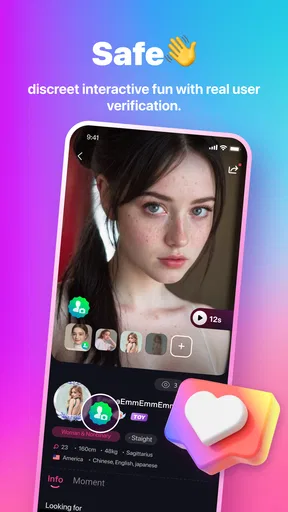
 Analysis by AppCompare
I approached Tophy as a social app built around matching, chat, dating, and toy control rather than as a conventional messaging service. That combination immediately makes it more specialized than the usual social platforms: the appeal depends on finding people who are comfortable with the same kind of adult interaction, not simply on collecting contacts or scrolling through a public feed.
My overall impression is mixed. The concept is distinctive, and the free entry point makes it easy to decide whether the atmosphere suits you. At the same time, the modest average rating of 2.0 from around 1.6 thousand ratings suggests that many users have encountered problems or expectations the app did not meet. I would therefore treat it as an experiment for a specific audience, not as a universal dating recommendation.
How the app positions itself and what the free entry point means
Tophy is developed by Longdistance and belongs to the social category, although its mature dating focus gives it a very different feel from general-purpose social apps. It is free to install and use as an entry point, with optional in-app purchases ranging from $0.49 to $299.99 per item. That is the most important cost distinction: downloading it does not require an upfront payment, but the presence of purchases means the experience may include paid ways to extend or enhance participation.
I like that the basic decision can be made before spending money. You can first see whether the matching pool, chat style, and overall tone are relevant to you. However, “free” should not be read as “everything is free.” The unusually wide purchase range means I would avoid buying anything impulsively, especially before understanding what a particular item does and whether it improves a real problem for you.
The app is rated Mature 17+, which is consistent with its dating and intimate-device angle. That rating is not a minor label here; it should shape how you think about privacy, conversations, and the people you may encounter. I would not install it casually on a shared device or hand it to a younger family member. Anyone using it should be comfortable setting boundaries and ending conversations quickly when the tone becomes unwelcome.
Tophy first appeared on October 25, 2022, and the current version is 3.48.2. It supports Android 7.0 and later, so compatibility should cover many older Android phones. Still, an older operating system can create a less comfortable experience for sensitive social apps, particularly if the phone no longer receives modern security updates. I would favor a current, privately secured device rather than treating minimum compatibility as a recommendation.
The practical meaning of “toy control”
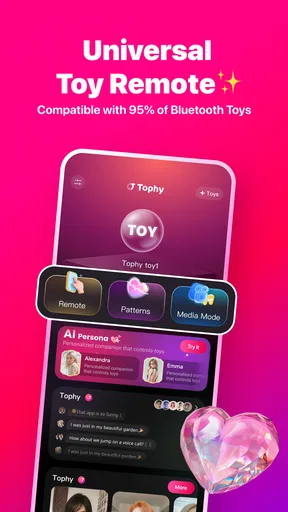
The toy-control element is what separates Tophy from a normal match-and-chat app. It suggests that the app is intended for people who want technology to participate in an intimate connection, rather than merely helping two people exchange messages. That makes the app potentially interesting for long-distance couples or adults exploring a more interactive form of dating.
Worth Reading Before You Choose

EA SPORTS FC Mobile 26 Is a Bigger Football Game, but It Takes Time

Flipboard Shows What News Apps Must Do Beyond the Feed

Switching to Android Auto Means Rethinking Your Driving Routine

Google Calendar Makes a Crowded Week Easier to Manage

Ludo King Makes the Most of the Minutes Between Plans

Baby Panda World Brings Quick Play to Modern Phones, but Its Game Library Feels Busy
It also creates a trade-off that ordinary dating apps do not have. A match is not automatically a trustworthy partner, and a chat connection should not be given control over anything personal simply because the conversation feels exciting. My strongest practical advice is to treat control as a privilege earned through repeated, respectful interaction. Start with clear limits, agree on when interaction is welcome, and keep the ability to stop it immediately in your own hands.
This is also where Tophy may be a poor fit for someone who only wants casual conversation. If you are looking for a broad dating pool, detailed profiles, or a familiar swipe experience without an intimate-device component, a mainstream dating service will probably feel more straightforward. Tophy’s identity is narrower, and that narrowness is both its main attraction and its main limitation.
What using the matching and chat side demands from you
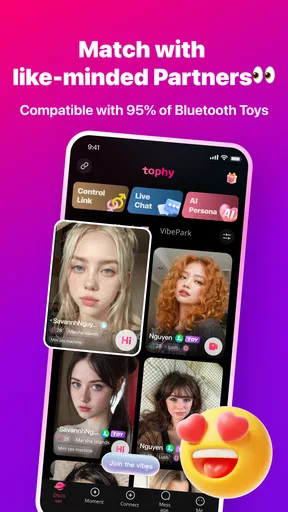
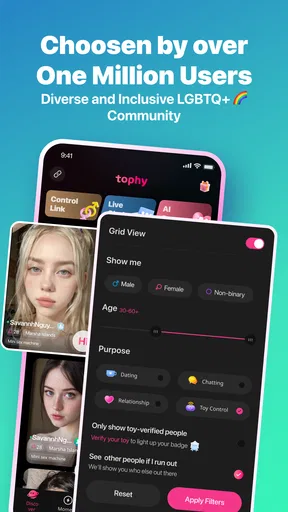
The matching feature should be approached as a filter for possible compatibility, not as proof that another person shares your boundaries. In my view, the best workflow is to use early chat to establish ordinary trust before discussing anything intimate: confirm what each person wants, make sure the conversation remains respectful, and notice whether the other person accepts a “no” without pressure.
That approach may sound cautious, but it is especially useful here because the app combines dating with a more personal kind of interaction. A person who rushes past basic consent is not a good candidate for deeper engagement, no matter how attractive the match appears. This is one of the hidden trade-offs of a specialized social app: the niche can help you find like-minded people, but it can also encourage users to move faster than they should.
For couples already in a committed long-distance relationship, the workflow is different. One partner could use the app as a shared space for planned private interaction rather than as an open-ended search for strangers. Even then, I would keep expectations explicit. Decide who can initiate contact, when the feature should remain unused, and what happens if one person changes their mind. Those conversations protect the relationship more effectively than any novelty inside the app.
Where the value is real, and where it becomes harder to judge
The clearest value is access. Because the app is free to start, you can evaluate its social environment without paying an entry fee. That matters for a niche service: the real question is not whether the idea sounds interesting, but whether enough suitable people are available for your situation. A free starting point lets you answer that through experience instead of committing to a subscription before seeing the community.
The second source of value is focus. General dating apps often make users explain or hide interests that are central to their relationships. Tophy places matching, chat, dating, and toy control in the same product, so people arriving with that specific interest may spend less time translating what they want. For the right user, that focus can be more valuable than a larger but less relevant social network.
There is also potential value for distance. If two adults already care about each other but cannot meet regularly, an app designed around connected interaction may offer a more personal routine than text messaging alone. I would not call it a replacement for a video call, a normal conversation, or physical time together. Its value is better understood as an additional layer for couples who already communicate well.
The paid side is more complicated. Purchases are available from $0.49 to $299.99 per item, but the price range alone does not tell me that spending produces good value. I would only consider a purchase after using the free portion long enough to identify a specific benefit. If the free experience already provides the conversations and connections you want, paying may add little. If an essential part of the experience is locked behind purchases, the value depends on whether that part is genuinely useful to you rather than merely tempting.
That distinction is important because intimate social apps can turn curiosity into spending quickly. A small purchase may feel harmless, while repeated purchases can become difficult to track. I recommend setting a personal limit before buying anything and checking the purchase confirmation carefully. The top end of the listed range is high enough that careless tapping would be an avoidable mistake.
Three less obvious ways to test whether it suits you
Use the first sessions to measure conversation quality, not match quantity. A long list of possible contacts has little value if chats become pushy, repetitive, or incompatible with your boundaries.
Separate romantic interest from device access. Keep dating conversations and control permissions conceptually distinct until trust has been demonstrated over time. This prevents the app’s novelty from making the decision for you.
Try it during a normal week rather than only during a moment of excitement. If you are part of a long-distance couple, see whether it fits naturally around work, sleep, and existing calls. A feature that feels impressive once may still be inconvenient as a routine.
These tests help answer the questions that a store summary cannot answer. Is the community relevant to you? Does chat feel comfortable? Does the app support your relationship, or does it create pressure to be available? And does any paid item solve a problem you actually have? I would want those answers before spending more than the smallest amount.
Privacy, boundaries, and everyday use
My realistic everyday scenario would be a couple living in different cities who already has a regular evening call. They might use Tophy for a planned, mutually agreed interaction, then return to ordinary conversation afterward. The useful part is not constant access; it is having a separate activity that both people choose. If one partner is busy, tired, or uncomfortable, the session should simply wait.
For someone meeting new people, I would use the app more slowly. Keep the first conversations general, avoid sharing identifying details too early, and do not let a match pressure you into moving faster than your comfort level. The fact that a person is interested in the same niche does not establish honesty, reliability, or emotional compatibility.
Another practical point is device privacy. Since the app is aimed at mature users and may be used for intimate conversations, notifications and open chats deserve attention. I would review what appears on the lock screen, avoid leaving an active session open on a shared tablet, and use a device lock that other people cannot guess. These are simple habits, but they matter more here than they would in a casual social app.
I would also keep the app updated where possible. The current version is 3.48.2, and the supported Android floor is 7.0. An older phone may technically run it while still being a poor choice for private social activity if its broader software environment is outdated. Compatibility tells you whether installation is possible; it does not tell you whether the device is a sensible place for sensitive conversations.
How it compares with ordinary dating and chat alternatives
Compared with a mainstream dating app, Tophy offers a more specialized purpose but a narrower reason to join. A mainstream service is usually the better option when your priority is meeting a large variety of people, browsing conventional profiles, or keeping dating separate from intimate-device features. It may also feel more familiar if you want a standard match-to-message routine.
Compared with a normal messaging app, Tophy is more relationship-oriented and potentially more interactive, but a messaging service is often better for friends, family, work contacts, and established communication habits. If your main goal is reliable conversation across devices, you may not need the extra dating layer at all.
Compared with using a toy’s own companion software, Tophy’s social angle is the deciding difference. A dedicated companion app may be preferable when you only want direct control, predictable setup, or a private experience with a partner you already know. Tophy makes more sense when matching and discovery are part of the reason you are installing it. That also means it carries more social uncertainty than a tool used only between two trusted people.
In short, the app is not automatically “better” than the usual alternatives. It is more targeted. Targeted products can feel wonderfully relevant when they match your needs, but frustrating when they do not. I would choose Tophy for its specific combination, not because it replaces every other social tool.
Who should try it, and who should skip it
I can see the strongest case for adults who are specifically interested in dating or chatting around toy control, and for long-distance couples who want to explore that kind of shared interaction. The free starting point is useful for both groups because it lets them judge the community before committing money. People who value a niche environment more than a huge user base may find the focused concept worthwhile.
I would be more cautious recommending it to someone who is new to online dating, uncomfortable with mature conversations, or easily pressured by matches. The app’s subject matter requires firm boundaries, and no specialized feature compensates for weak trust or unclear consent. Someone seeking friendship, family messaging, or broad social networking should also look elsewhere.
The rating of 2.0, based on around 1.6 thousand ratings, is a meaningful warning sign. It does not tell me that every person will have a bad experience, but it does tell me to keep expectations realistic and avoid paying heavily before testing the basics. With around 100 thousand installs, the app has attracted a substantial audience, yet that does not guarantee that the right kind of match will be active in your area or available when you want to chat.
My recommendation is therefore conditional: try the free access, keep the first interactions slow, and decide based on actual conversation quality rather than the promise of the concept. If the app feels empty, awkward, or overly focused on purchases, stop there. If it gives you respectful connections and a feature set that genuinely fits your relationship, modest spending may be easier to justify, but only within a limit you choose in advance.
My buy-or-skip verdict
I would say skip the purchase at first, but consider trying the free app if its mature dating and toy-control focus matches what you are actively looking for. The free entry point gives Tophy a fair chance, while the purchase range makes immediate spending difficult to recommend without knowing exactly which paid item delivers value for you.
For a long-distance couple or a user seeking this precise niche, Tophy may offer something ordinary dating and chat apps do not. For everyone else, the specialized focus, mature audience, low average rating, and possible spending friction outweigh the novelty. My final view is that this is a targeted experiment rather than a dependable all-purpose social platform: useful for the right adults, but best approached slowly, privately, and with a firm budget.
Pros
- Simple profile browsing makes discovering potential matches quick.
- Chat features help users start conversations without sharing personal contact details.
- Useful filters can narrow matches by interests and preferences.
- The app offers a convenient way to meet people beyond your local social circle.
- A mobile-focused design makes checking messages and matches easy on the go.
Cons
- Some features may require a paid subscription or in-app purchases.
- Match quality depends heavily on the number of active users in your area.
- Profiles may vary in detail
- making it difficult to judge compatibility.
- Users should remain cautious about fake profiles and misleading information.
- Frequent notifications can become distracting if settings are not adjusted.
FAQs for Tophy - Match,Chat,Dating
What is Tophy - Match, Chat, Dating, and how does it work?
Tophy - Match, Chat, Dating is a social and dating app designed to help users discover potential matches, start conversations, and build new connections. After creating a profile, you can browse or receive suggested profiles, express interest, and chat when interaction is available. The experience generally depends on your profile information, preferences, location settings, and the number of active users nearby.
Is Tophy - Match, Chat, Dating free to download and use?
The app may be available to download at no initial cost, but some features can depend on the current version, region, or account type. Basic profile creation and matching options may be accessible for free, while enhanced visibility, additional interactions, or other advanced tools could require in-app purchases or a subscription. Check the app store listing and payment screen carefully before confirming any purchase.
How can I create a more effective profile on Tophy?
A complete and honest profile usually gives you a better chance of receiving relevant matches and meaningful messages. Use recent photos that clearly show you, write a short description that reflects your personality, and select preferences accurately. Avoid sharing sensitive information such as your home address, financial details, passwords, or identification documents. You should also review your profile visibility and privacy settings before interacting with others.
Is Tophy safe for chatting and meeting new people?
No dating platform can guarantee that every user is genuine, so you should remain cautious while using Tophy. Keep early conversations inside the app, avoid sending money or personal documents, and be careful with links or requests that seem unusual. If you decide to meet someone, choose a public location, tell a trusted person about your plans, and use the app’s reporting or blocking tools when necessary.
What should I do if I experience unwanted messages, suspicious profiles, or account problems?
If another user sends inappropriate messages, pressures you, requests money, or appears to be impersonating someone, stop communicating and use the available block and report options. Do not respond with private information. For login, subscription, profile, or technical issues, check the app’s help or support section and contact the official support channel. Keep payment confirmations and relevant screenshots available if you need assistance resolving a problem.


